Dark Fantasy vs Horror Fantasy Explained
Fantasy and horror have always shared a dark and uneasy relationship. Both genres thrive on danger, fear, death, mystery, and the supernatural. Both transport readers into worlds where ordinary rules no longer apply. Yet despite their similarities, there are important differences between dark fantasy and horror fantasy — differences that shape atmosphere, storytelling, character development, and the emotional experience for readers.
For fans searching for the best dark fantasy books, horror fantasy novels, grimdark fantasy, or medieval horror fiction, understanding the distinction between these genres can help uncover entirely new worlds of storytelling.
This guide explores the key differences between dark fantasy and horror fantasy, their origins, themes, famous examples, and why readers continue to love stories filled with monsters, bloodshed, ancient evil, and supernatural terror.
What Is Dark Fantasy?
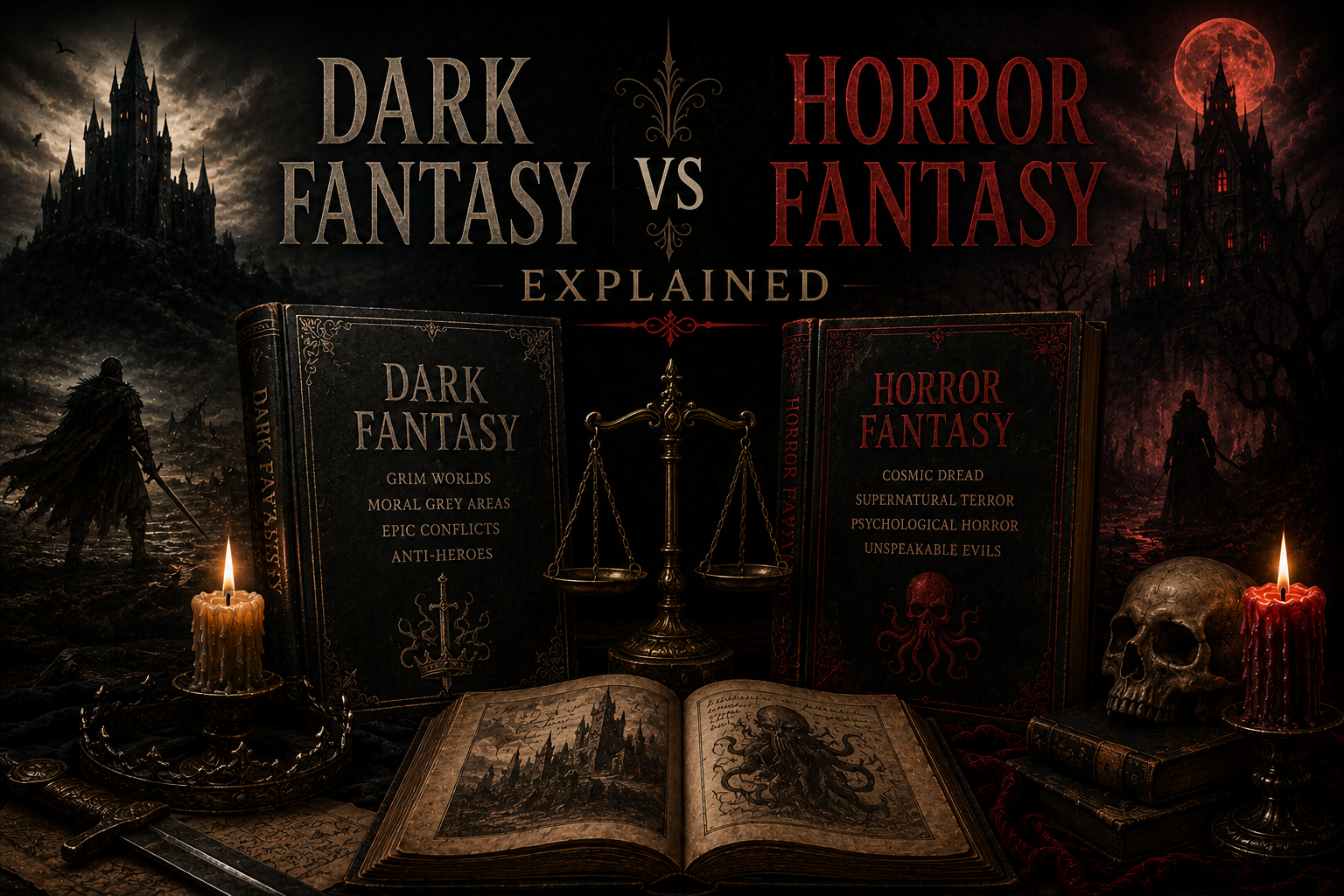
Dark fantasy is a subgenre of fantasy that blends traditional fantasy elements with darker themes, mature storytelling, moral ambiguity, violence, and Gothic atmosphere.
Unlike heroic fantasy, where good and evil are clearly separated, dark fantasy often exists in morally grey worlds where survival matters more than heroism.
Dark fantasy stories commonly include:
- Corrupt kingdoms
- Ancient curses
- Supernatural creatures
- Brutal warfare
- Political betrayal
- Vampires, demons, witches, and undead horrors
- Psychological darkness
- Gothic settings
- Tragic antiheroes
The emphasis is usually placed on the world itself, its mythology, and the struggles of characters trying to survive within it.
Dark fantasy often asks:
- What happens when evil cannot truly be defeated?
- What if heroes are flawed?
- What if power corrupts everyone?
- What if monsters are more human than humans?
Key Features of Dark Fantasy
1. Morally Grey Characters
Dark fantasy rarely contains purely heroic protagonists.
Characters are often:
- Antiheroes
- Mercenaries
- Outcasts
- Cursed warriors
- Fallen kings
- Ruthless survivors
Readers are drawn into complex moral dilemmas where characters must make terrible choices.
Examples include:
- Geralt in The Witcher
- Sand dan Glokta in The First Law
- Elric of Melniboné
- Roland Deschain in The Dark Tower
2. Grim and Dangerous Worlds
Dark fantasy worlds are harsh, violent, and unforgiving.
Common settings include:
- War-torn kingdoms
- Gothic castles
- Ancient ruins
- Haunted forests
- Plague-ridden cities
- Medieval landscapes
Unlike high fantasy, dark fantasy often emphasizes decay and corruption rather than wonder and heroism.
3. Supernatural Evil
Dark fantasy heavily incorporates supernatural forces:
- Vampires
- Necromancers
- Demons
- Dark gods
- Curses
- Ancient prophecies
However, these creatures are usually part of the world itself rather than purely being tools for fear.
The supernatural is integrated into politics, religion, warfare, and society.
4. Mature Themes
Dark fantasy explores themes such as:
- Death
- Betrayal
- Corruption
- Religious fanaticism
- Madness
- Obsession
- Revenge
- Human cruelty
The tone is usually bleak but deeply immersive.
What Is Horror Fantasy?
Horror fantasy combines fantasy storytelling with the primary goal of horror: fear.
Where dark fantasy focuses on dark worlds and morally complex storytelling, horror fantasy is designed to create:
- Terror
- Suspense
- Dread
- Psychological fear
- Shock
- Unease
The fantasy elements exist largely to amplify horror.
Horror fantasy often centres around:
- Monsters
- Haunted places
- Demonic entities
- Cosmic horror
- Supernatural killers
- Ancient evils
The reader’s emotional experience is meant to be frightening first and fantastical second.
Key Features of Horror Fantasy
1. Fear Is the Central Goal
The biggest difference between dark fantasy and horror fantasy is intent.
Dark fantasy wants readers to explore dangerous worlds.
Horror fantasy wants readers to feel fear.
Everything — atmosphere, pacing, creatures, and suspense — serves that purpose.
2. Monsters as Threats
In dark fantasy, monsters may coexist with humanity.
In horror fantasy, monsters are usually terrifying forces of destruction.
Examples include:
- Ancient vampires
- Demonic creatures
- Possessed entities
- Lovecraftian horrors
- Shape-shifting nightmares
These beings represent chaos, death, and existential fear.
3. Claustrophobic Atmosphere
Horror fantasy thrives on atmosphere:
- Isolated castles
- Underground crypts
- Endless forests
- Shadow-filled monasteries
- Haunted villages
- Candlelit ruins
The setting itself becomes part of the horror.
4. Psychological Terror
Many horror fantasy novels focus on the human mind:
- Madness
- Paranoia
- Hallucinations
- Religious terror
- Supernatural obsession
The greatest horror often comes not from monsters, but from what fear does to people.
Dark Fantasy vs Horror Fantasy: The Core Difference
The simplest explanation is this:
Dark Fantasy
Fantasy first. Darkness shapes the world.
Horror Fantasy
Horror first. Fear drives the story.
Both genres overlap heavily, but the emotional focus differs.
Dark fantasy emphasizes:
- Worldbuilding
- Moral complexity
- Violence
- Gothic atmosphere
- Epic storytelling
Horror fantasy emphasizes:
- Fear
- Suspense
- Terror
- Psychological dread
- Survival
Where the Genres Overlap
Some of the greatest modern novels blend both genres together.
A book may contain:
- Epic fantasy storytelling
- Medieval warfare
- Ancient mythology
- Vampires and monsters
- Gothic horror
- Psychological terror
This overlap is where many readers discover their favourite stories.
Popular crossover themes include:
- Medieval vampire fiction
- Gothic dark fantasy
- Grimdark horror
- Supernatural war stories
- Occult fantasy
The Rise of Grimdark Fantasy
One of the biggest evolutions of dark fantasy has been the rise of grimdark fantasy.
Grimdark pushes dark fantasy even further into brutality and realism.
Common grimdark features include:
- Extreme violence
- Cynical worldviews
- Ruthless politics
- Broken heroes
- Moral collapse
The phrase originated from the tagline of Warhammer 40,000:
“In the grim darkness of the far future, there is only war.”
Today, grimdark fantasy dominates much of modern adult fantasy fiction.
Famous Dark Fantasy Books
Some of the most influential dark fantasy novels include:
The First Law — Joe Abercrombie
A brutal and cynical fantasy world filled with war, torture, politics, and deeply flawed characters.
The Witcher — Andrzej Sapkowski
A dark medieval fantasy blending monster hunting, folklore, moral ambiguity, and political conflict.
Elric of Melniboné — Michael Moorcock
One of the earliest dark fantasy antiheroes.
The Dark Tower — Stephen King
A fusion of dark fantasy, horror, westerns, and apocalyptic storytelling.
Between Two Fires — Christopher Buehlman
A terrifying medieval horror fantasy set during the Black Death.
Famous Horror Fantasy Books
Dracula — Bram Stoker
The definitive Gothic vampire horror novel.
The Haunting of Hill House — Shirley Jackson
Psychological supernatural horror with Gothic fantasy undertones.
The Fisherman — John Langan
Cosmic horror blended with dark folklore.
Hellmouth — Giles Kristian
Medieval horror fantasy with demonic terror.
Interview with the Vampire — Anne Rice
A Gothic blend of horror, tragedy, immortality, and philosophical darkness.
Why Medieval Settings Work So Well
Both dark fantasy and horror fantasy thrive in medieval worlds.
The medieval period naturally enhances fear because it was a time filled with:
- Superstition
- Religious terror
- Disease
- Warfare
- Isolation
- Witchcraft accusations
- Folklore
- Brutal justice
In medieval Europe, people genuinely believed in demons, curses, and vampires.
This historical reality creates incredibly immersive storytelling opportunities.
The Role of Vampires in Dark Fantasy and Horror
Vampires exist perfectly between both genres.
In horror fantasy:
- Vampires are terrifying predators
- Symbols of death and corruption
- Creatures of fear
In dark fantasy:
- Vampires may become rulers, warriors, or tragic antiheroes
- They exist within larger political and supernatural systems
- Their mythology becomes part of worldbuilding
This flexibility explains why vampire fiction continues to evolve.
Gothic Horror and Dark Fantasy
Gothic fiction helped shape both genres.
Classic Gothic elements include:
- Crumbling castles
- Forbidden knowledge
- Madness
- Candlelit corridors
- Religious symbolism
- Ancient curses
- Tragic romance
Modern dark fantasy frequently borrows heavily from Gothic traditions.
This creates the atmospheric blend readers love in:
- Vampire novels
- Medieval horror
- Occult fantasy
- Supernatural thrillers
Why Readers Love Dark Fantasy and Horror Fantasy
Readers are drawn to these genres because they explore emotions and fears that ordinary fiction cannot.
These stories confront:
- Mortality
- Evil
- Fear
- Corruption
- Human weakness
- Survival
- Obsession
Yet they also offer:
- Escapism
- Epic storytelling
- Mythology
- Adventure
- Emotional intensity
Dark fantasy and horror fantasy feel dangerous in ways many other genres do not.
Which Genre Is Right for You?
You May Prefer Dark Fantasy If You Enjoy:
- Large fantasy worlds
- Complex politics
- Antiheroes
- Medieval warfare
- Moral ambiguity
- Gothic atmosphere
- Epic storytelling
You May Prefer Horror Fantasy If You Enjoy:
- Fear and suspense
- Psychological terror
- Monsters
- Supernatural dread
- Haunted settings
- Survival stories
- Disturbing atmosphere
Of course, many readers enjoy both.
Modern Dark Fantasy and Horror Fantasy
Modern fiction increasingly blends genres together.
Readers now expect stories that combine:
- Fantasy worldbuilding
- Horror atmosphere
- Psychological depth
- Historical realism
- Supernatural mythology
This fusion has created a golden age for readers who love darker fiction.
Books that combine medieval horror, Gothic fantasy, vampire mythology, and grimdark storytelling continue to grow in popularity.
Blood of the Damned and the Dark Fantasy Horror Blend
For readers searching for fiction that combines both dark fantasy and horror fantasy, medieval vampire novels occupy a unique space.
The Blood of the Damned series by Antony J. Stanton blends:
- Medieval warfare
- Gothic horror
- Traditional vampire mythology
- Dark fantasy worldbuilding
- Psychological terror
- Historical atmosphere
Rather than treating vampires purely as monsters, the series explores ancient evil, political conflict, superstition, and human corruption within a brutal medieval setting.
This combination of dark medieval fantasy, vampire horror, and Gothic storytelling reflects the growing popularity of hybrid fantasy-horror fiction.
Final Thoughts
The line between dark fantasy and horror fantasy will always remain blurred — and that is part of what makes both genres so compelling.
Dark fantasy explores worlds consumed by darkness.
Horror fantasy forces readers to confront fear itself.
Together, they create some of the most atmospheric, emotional, violent, haunting, and unforgettable stories in modern fiction.
Whether you prefer cursed kingdoms, ancient vampires, demonic horrors, or grim medieval warfare, both genres continue to push fantasy storytelling into darker and more fascinating territory than ever before.