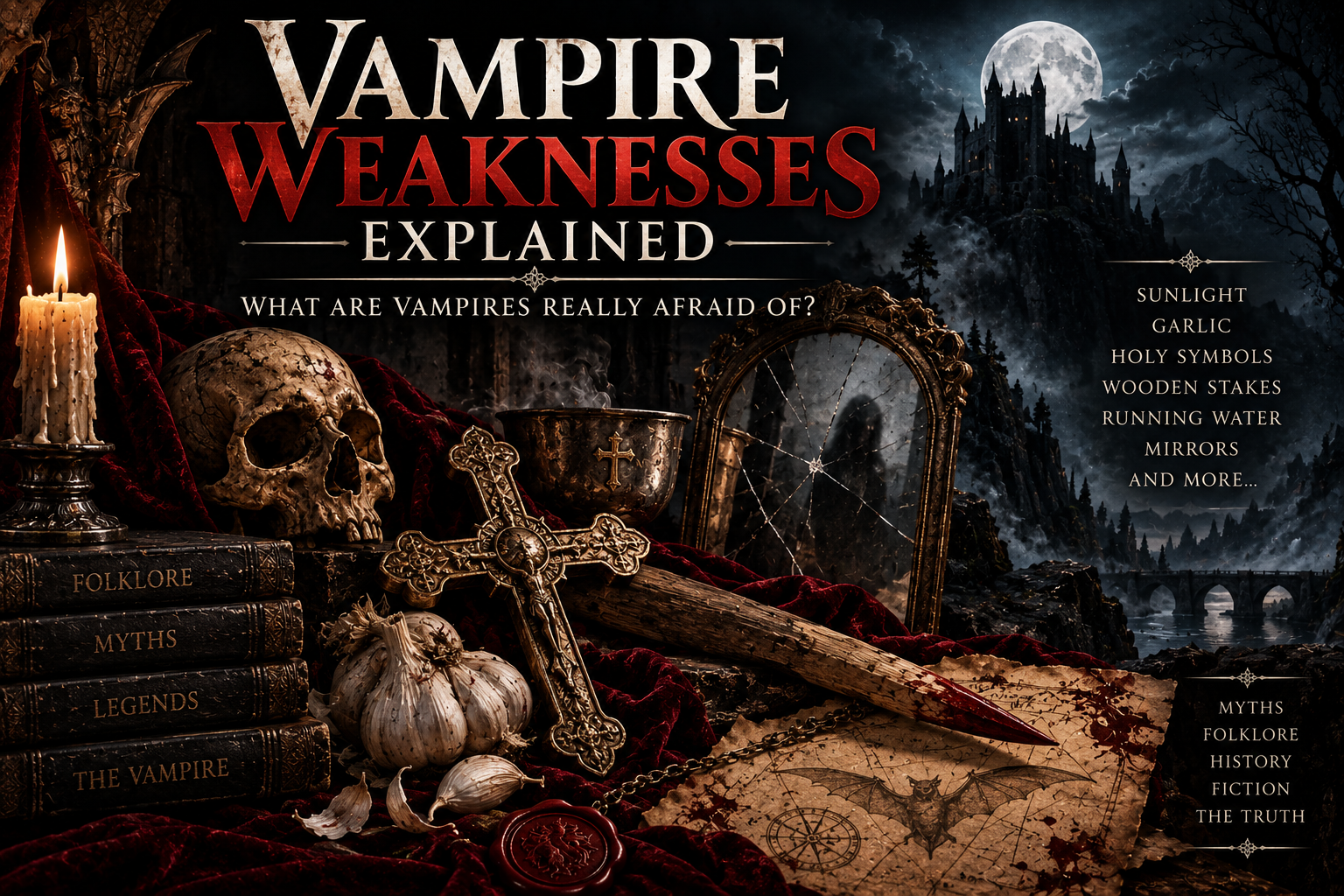
Castles after dark. Plague-ridden villages. Religious fear. Ancient forests. Warring kingdoms. Superstition whispered around the fire.
And somewhere beyond the walls, the dead refuse to stay dead.
There is something particularly unsettling about placing vampires in the medieval world.
Long before blood tests, CCTV, electric lights and instant communication, unexplained deaths really could become legends. Disease could sweep through a village without anyone understanding why. Travellers disappeared. Wolves prowled the forests. Faith and superstition existed alongside brutal political realities.
It is almost the perfect environment for a vampire.
For readers searching for medieval vampire books, however, finding novels that genuinely combine vampires with medieval or strongly historical settings can be surprisingly difficult.
Some are pure vampire horror. Others are dark medieval fantasy with vampiric creatures or themes. Some take us into alternative histories where the supernatural has been hiding behind recorded events all along.
So extinguish the lights, bolt the door and keep something wooden and pointed within reach.
Here are 12 dark books for readers who want vampires, medieval history, Gothic horror and dark fantasy.
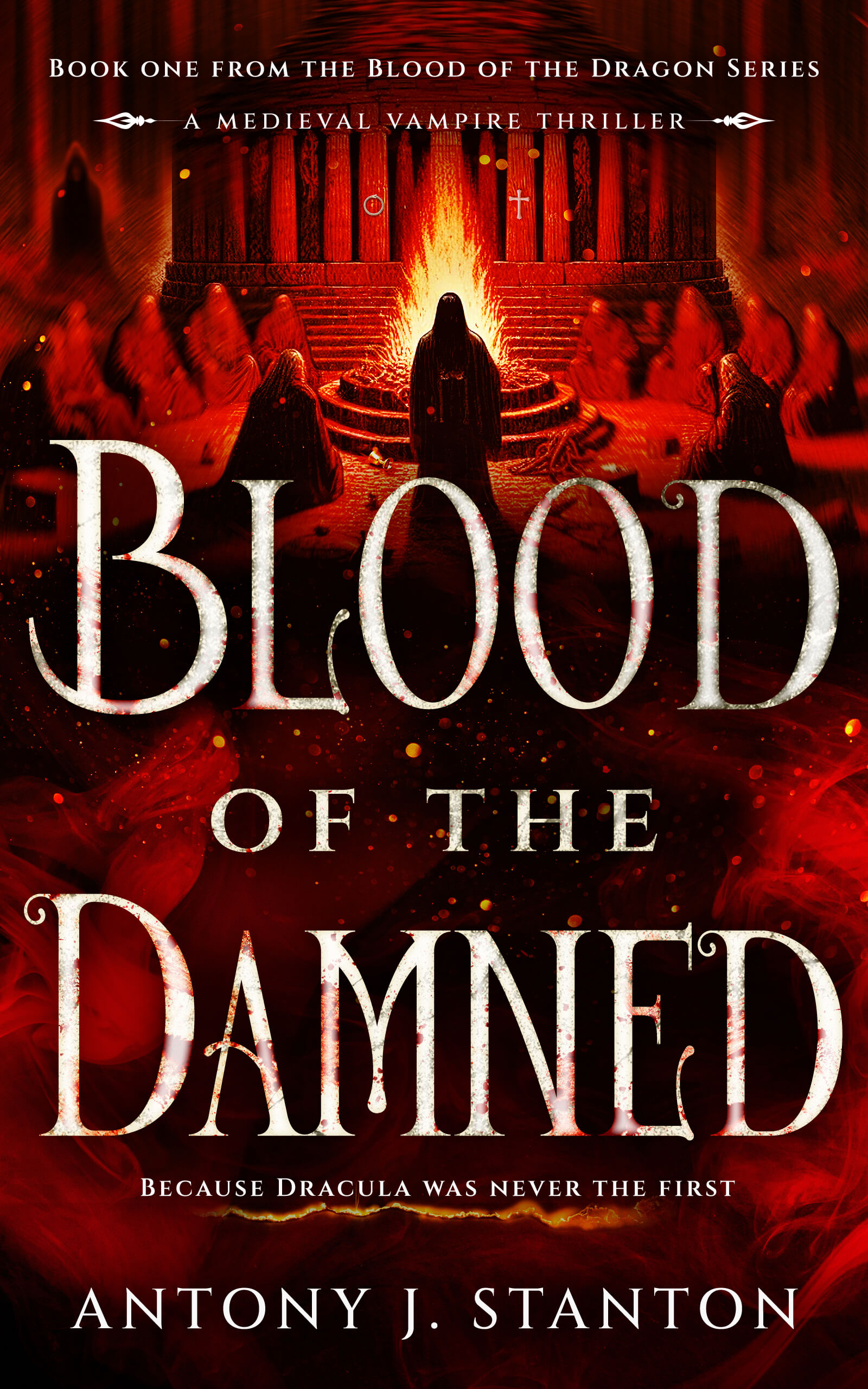
1. Blood of the Damned — Antony J. Stanton
If you’re specifically looking for a medieval vampire novel, Blood of the Damned begins exactly where history and vampire horror should meet: in the bloodshed, religious conflict and political instability of medieval Eastern Europe.
The first novel in Antony J. Stanton’s Blood of the Dragon series follows Darius, a young Bulgarian lord whose life is torn apart when his mother is brutally slaughtered by a vampire.
But revenge is only the beginning.
His surviving sister is ill. His father has abandoned them. War threatens from the Ottoman Empire. Vlad Dracula and the Order of the Dragon belong to the world into which Darius was born.
And somewhere in the darkness is the creature he has sworn to destroy.
The novel mixes medieval warfare, vampire mythology, Gothic horror, political intrigue, religious conflict and coming-of-age dark fantasy.
Rather than transplanting a modern vampire into an old castle, Blood of the Damned attempts something more ambitious: creating a hidden society of immortals existing alongside medieval humanity, complete with its own history, laws, rivalries and vendettas.
It is a world in which folklore and superstition become particularly dangerous because some of the stories may actually be true.
Best for: Readers looking specifically for medieval vampire fiction, Gothic historical horror, Eastern European vampire mythology and expansive dark fantasy world-building.
2. Empire of the Vampire — Jay Kristoff
Jay Kristoff’s Empire of the Vampire brought epic vampire fantasy thundering back into mainstream fantasy fiction.
The premise is irresistible.
The sun has been diminished, vampires have risen, and humanity is fighting for survival in a vast Gothic world.
At the centre is Gabriel de León, a member of a holy order dedicated to fighting the creatures of the night.
The world isn’t historical medieval Europe in the conventional sense. It is fantasy.
But its religious orders, swords, fortifications, social structures and Gothic aesthetic make it enormously appealing to readers searching for medieval vampire books for adults.
Kristoff combines the scale of epic fantasy with the blood and brutality of vampire horror.
These vampires aren’t misunderstood neighbours hoping everyone can get along.
They are dangerous.
And there are lots of them.
Best for: Readers wanting huge-scale dark fantasy, vampire hunters, religious orders, battles and lavish Gothic world-building.
3. The Historian — Elizabeth Kostova
If you prefer your vampire fiction steeped in genuine history, The Historian approaches Dracula from a very different direction.
Elizabeth Kostova’s novel combines literary mystery, historical research, travel and Gothic horror as its characters pursue the possibility that Vlad Dracula’s story did not end with his death.
The narrative travels through libraries, monasteries, archives and historic landscapes as the past gradually intrudes upon the present.
This isn’t a medieval action fantasy.
Instead, medieval history itself becomes part of the mystery.
The novel’s power comes from the possibility that somewhere within dusty documents and half-forgotten stories lies evidence that the impossible might be real.
Best for: Readers who enjoy historical vampire fiction, Vlad Dracula, old manuscripts, scholarly mysteries and slow-burning Gothic atmosphere.
4. Anno Dracula — Kim Newman
What if Dracula won?
That’s the delicious starting point for Kim Newman’s Anno Dracula.
Rather than remaining a hunted outsider, Count Dracula has married Queen Victoria and transformed British society. Vampires exist openly among the living, creating an alternative history packed with literary and historical references.
Its principal setting is Victorian rather than medieval, but it earns its place here because of what Newman does with Dracula, history and vampire mythology.
The vampire isn’t isolated from human history.
He changes it.
That concept is especially interesting for anyone attracted to historical vampire novels: what would happen if immortals genuinely participated in the events we think we understand?
Best for: Readers who enjoy alternative history, Dracula, literary references and intelligent vampire world-building.
5. Fevre Dream — George R. R. Martin
George R. R. Martin is synonymous with epic medieval-style fantasy, but Fevre Dream takes him somewhere quite different.
Set on the Mississippi River in 1857, it follows steamboat captain Abner Marsh and the mysterious Joshua York.
It isn’t medieval.
It isn’t even Gothic Europe.
But it is one of the most interesting examples of vampire fiction embedded within a convincing historical world.
Martin treats the vampire as something that can possess its own culture, biology and relationship with humanity rather than simply functioning as a supernatural villain.
That makes Fevre Dream especially rewarding for readers interested in vampire societies and historical world-building.
Best for: Readers who want intelligent vampire mythology, historical atmosphere and morally complex immortals.
6. Between Two Fires — Christopher Buehlman
Now we enter the medieval nightmare properly.
Christopher Buehlman’s Between Two Fires is not primarily a traditional vampire novel, and that distinction is important.
It is, however, one of the strongest recommendations for anyone searching for medieval horror fantasy.
Set in plague-ravaged fourteenth-century France, the novel follows a disgraced knight and a mysterious young girl through a landscape where the Black Death may be only one symptom of something far more terrible.
Demons, religious horror, grotesque creatures, ruined communities and supernatural terror inhabit a medieval world already being destroyed by disease.
Why include it on a vampire list?
Because if what attracts you to medieval vampire fiction is the collision between historical reality and supernatural horror, this is exactly the sort of darkness you’re probably looking for.
Best for: Readers wanting medieval horror, plague, religious terror, demons and genuinely disturbing dark fantasy.
7. Dracula — Bram Stoker
No serious journey through vampire fiction can avoid Dracula.
Bram Stoker’s 1897 novel isn’t medieval fiction. Most of its story belongs firmly to the late nineteenth century.
But Count Dracula carries the medieval past into the modern world.
His Transylvanian castle, ancient lineage, connection with warfare and the novel’s invocation of Eastern European history give Dracula the weight of something old invading something new.
More importantly, almost every modern medieval vampire novel exists in the enormous shadow cast by Stoker’s creation.
Castles.
Blood.
Religious protection.
The aristocratic immortal.
The vampire hunter.
The journey into an unfamiliar Eastern Europe.
Modern authors continually dismantle and rebuild these ideas.
To understand where medieval Gothic vampire fiction came from, it helps enormously to meet the Count himself.
Best for: Anyone interested in classic vampire literature, Gothic horror and the foundations of the modern vampire novel.
8. Carmilla — Sheridan Le Fanu
Published before Dracula, Sheridan Le Fanu’s Carmilla is one of the foundational works of vampire literature.
Its isolated estates, ruined landscapes, mysterious ancestry and seductive supernatural threat helped establish ideas that later vampire fiction would repeatedly revisit.
Like Dracula, this is not technically a medieval novel.
But it possesses something many modern medieval dark fantasy novels try very hard to reproduce:
Gothic atmosphere.
The fear doesn’t come from enormous armies of supernatural creatures.
It enters quietly.
Something is wrong.
Someone isn’t what she appears to be.
And by the time the truth becomes apparent, the vampire is already dangerously close.
Best for: Readers who want classic Gothic vampire fiction, psychological unease and an essential piece of vampire literary history.
9. I, Strahd: The Memoirs of a Vampire — P. N. Elrod
For readers who like their vampires surrounded by castles, swords, doomed relationships and dark fantasy kingdoms, I, Strahd is an obvious choice.
The novel explores the history of Count Strahd von Zarovich, the vampire lord of Ravenloft.
This is unapologetically fantasy rather than historical fiction, but the feudal setting, warfare, nobility and Gothic architecture make it particularly appealing to readers seeking the atmosphere of medieval vampire fantasy.
Strahd’s transformation also explores one of vampire fiction’s favourite questions:
How does a human being become a monster?
And perhaps more importantly, when does he stop recognising that he has become one?
Best for: Readers wanting castles, tragic vampire lords, medieval-style fantasy and Gothic role-playing-world atmosphere.
10. The Vampire Genevieve — Jack Yeovil/Kim Newman
Before Anno Dracula, Kim Newman — writing as Jack Yeovil — introduced Genevieve Dieudonné into the dark fantasy world of Warhammer.
The stories collected around Genevieve combine vampires with an overtly fantasy environment of monsters, corruption, warfare and medieval-inspired society.
This is not historical Europe.
But for someone searching for medieval fantasy books with vampires, it occupies precisely the intersection that matters: sword-and-sorcery fantasy with Gothic horror running through its veins.
Genevieve herself is also a useful reminder that vampire characters don’t have to fit neatly into the categories of monster, romantic hero or villain.
Best for: Readers who want vampires inside a sprawling, dangerous fantasy world rather than our own history.
11. The Dragon Waiting — John M. Ford
John M. Ford’s The Dragon Waiting offers another unusual approach to history and fantasy.
Set within an alternative version of medieval and Renaissance Europe, the novel mixes politics, historical personalities and supernatural elements, including vampirism.
It demonstrates how effectively vampires can work when they aren’t necessarily the entire point of the story.
Place the supernatural within recognisable historical power struggles and suddenly vampirism becomes another force capable of changing politics, loyalty and succession.
That’s an idea with enormous possibilities.
If an immortal can live through several reigns, accumulate knowledge for centuries and manipulate generations of the same family, political power begins to look rather different.
Best for: Readers who enjoy alternative history, political intrigue and fantasy woven into recognisable European history.
12. The Name of Vampire — Antony J. Stanton
For readers who begin Blood of the Damned and want to continue Darius’s story, The Name of Vampire is the second novel in the Blood of the Dragon series.
It continues the medieval vampire story while pushing further into the consequences of vengeance, loyalty, love, distrust and the supernatural world revealed in the first book.
The historical and Gothic setting remains central, but the hidden vampire mythology expands.
This is important because the series isn’t designed around a single monster arriving in a medieval village.
The vampires have a world.
They have history.
They have relationships with one another.
They have rivalries that can last far longer than a human lifetime.
And humanity may not realise how often its own history has crossed theirs.
Best for: Readers who want to continue an epic medieval vampire series with dark fantasy world-building, Gothic horror and alternative history.
Why Do Vampires Work So Well in Medieval Fantasy?
Vampires fit the medieval world almost too perfectly.
Imagine experiencing something inexplicable in fifteenth-century Europe.
There is no internet to consult.
No emergency number.
No forensic laboratory.
No electric street lighting.
Your understanding of what has happened comes from family, neighbours, travellers, priests, physicians and stories passed between generations.
Now imagine that several people in your village die unexpectedly.
Someone remembers that the first victim looked strangely preserved when buried.
Someone else claims to have seen the dead man outside his house.
Another says the livestock are behaving strangely.
Is it disease?
Poison?
Fear?
Superstition?
Or has the dead man returned?
For us, vampire folklore is fascinating.
For people who believed the dead really could return, it could be terrifying.
Medieval History Was Already Dark Enough
The supernatural doesn’t have to work very hard to make medieval Europe frightening.
War was frequent.
Disease could be catastrophic.
Childbirth was dangerous.
Political power could change violently.
Religion shaped everyday life.
Travel could be slow and dangerous.
Justice could be brutal.
And communities possessed only a fraction of our modern understanding of infection, medicine and decomposition.
Introduce an immortal predator into that environment and you don’t need to create an artificial dystopia.
History has already built the stage.
The vampire merely has to walk onto it.
Historical Vampire Fiction vs Medieval Vampire Fantasy
Although the terms often overlap, there is a useful distinction.
Historical vampire fiction generally places supernatural creatures within a recognisable period of our own history.
Real places, events or historical figures may appear.
Medieval vampire fantasy has greater freedom. The world may resemble medieval Europe but contain invented kingdoms, religions, wars and political systems.
Neither approach is inherently better.
They create different pleasures.
Historical fiction lets the vampire hide behind events that really happened.
Fantasy allows the author to ask what history might have looked like if vampires had never needed to hide at all.
And alternative history occupies the wonderfully dangerous territory between them.
Gothic Medieval Fantasy: Castles Are Only the Beginning
A castle doesn’t automatically make a novel Gothic.
Nor does adding a vampire.
Gothic horror is about atmosphere, secrets, inheritance, isolation, corruption, forbidden knowledge and the past refusing to remain safely in the past.
That makes medieval settings especially powerful.
An ancient family can conceal a secret.
A ruined monastery can hide something that should never have been disturbed.
A noble bloodline can mean considerably more than inheritance.
A forest can conceal something older than the kingdom surrounding it.
And a castle can protect you from an army while trapping you inside with something worse.
The best Gothic medieval fantasy understands that the setting isn’t decoration.
It is part of the horror.
Vampires, Vlad Dracula and Medieval Eastern Europe
For obvious reasons, medieval Eastern Europe has become particularly important to vampire fiction.
The historical Vlad III of Wallachia — Vlad Dracula or Vlad the Impaler — was a fifteenth-century ruler, not a supernatural vampire.
His life belonged to a world of dynastic struggle, Ottoman expansion, shifting alliances and extreme violence.
Centuries later, Bram Stoker used the name Dracula for his fictional vampire Count.
History and fiction have been intertwined ever since.
That doesn’t mean every vampire story set in Eastern Europe needs Vlad Dracula.
Far from it.
The region has its own rich traditions of revenants, restless dead and supernatural beings that are considerably more varied than the popular image of Dracula.
For writers, this combination of documented history and folklore is irresistible.
For readers, it means the line separating what really happened from what might have happened can become deliciously thin.
Are Medieval Vampire Books Horror or Dark Fantasy?
Usually both.
A novel can contain the world-building, quests, warfare and supernatural mythology associated with fantasy while using the dread, violence and monsters of horror.
That’s particularly true of vampire fiction.
A vampire is inherently fantastical.
It is also potentially horrifying.
Give the vampire a castle, an army and several centuries to plan ahead and you’ve created something that fits very comfortably into epic dark fantasy.
Put the same creature outside a peasant family’s cottage at midnight and you’re back in horror.
The monster hasn’t changed.
Only the scale has.
Which Medieval Vampire Book Should You Read First?
It depends upon what you’re looking for.
If you want epic fantasy dominated by vampires, Empire of the Vampire is an obvious modern choice.
If you want medieval supernatural horror, even without conventional vampires at its centre, try Between Two Fires.
For classic Gothic vampire literature, begin with Dracula and Carmilla.
If you prefer historical investigation and Vlad Dracula, The Historian is a natural choice.
And if what you specifically want is vampires embedded in medieval Eastern European history, warfare and folklore, Blood of the Damned was written for precisely that territory.
The important thing is that vampire fiction no longer has to mean one particular kind of book.
The vampire can inhabit horror, fantasy, historical fiction, romance, literary fiction and epic adventure.
Personally, I think the creature feels particularly at home in the Middle Ages.
Perhaps it’s the castles.
Perhaps it’s the bloodshed.
Perhaps it’s the darkness.
Or perhaps vampires simply preferred a time before electric lighting.
Enter a Medieval World of Vampires
If your search for medieval vampire books brought you here because you want castles, warfare, Gothic horror, ancient mythology and vampires that are dangerous again, you can enter the Blood of the Dragon world with Blood of the Damned.
The series begins in medieval Europe amid Ottoman conflict, the Order of the Dragon and the shadow of Vlad Dracula, while an unseen society of immortals pursues conflicts and vendettas of its own.
Blood of the Damned is book one.
The Name of Vampire continues the story.
And Speak of the Devil provides another doorway into the same dark world.
Because history tells us what happened.
Vampire fiction asks a rather more interesting question:
What if history never knew the whole story?
Written by : AJS

Subscribe To My Newsletter
For book news, sneak-peaks, give-aways, fascinating stories of vampires, dark fantasy and horror from around the world, as well as the FREE novella, "Speak of the Devil," sign up for all this and more.
Link up with other link-minded fans of the dark and macabre.
Come. Join us.