27 Best Vampire Books of All Time: The Ultimate Reading List
The Best Vampire Books Ever Written
Vampires have captivated readers for centuries. From ancient folklore and Gothic horror to modern dark fantasy and epic supernatural thrillers, vampire fiction remains one of the most enduring genres in literature.
Whether you are searching for terrifying vampire horror books, atmospheric Gothic classics, dark fantasy epics, or unforgettable vampire novels filled with intrigue and suspense, there has never been a better time to explore the world of the undead.
The best vampire books do far more than tell stories about creatures of the night. They explore mortality, temptation, love, power, corruption, faith, and humanity’s deepest fears. Some vampires are ruthless monsters lurking in the shadows. Others are tragic antiheroes wrestling with their cursed existence. The genre is remarkably diverse, encompassing everything from medieval horror and historical fiction to modern thrillers and sprawling fantasy adventures.
The popularity of vampire fiction shows no sign of slowing down. New generations of readers continue to discover classic works such as Dracula and Carmilla, while contemporary authors continue to reinvent vampire mythology in exciting and unexpected ways.
This ultimate guide brings together some of the finest vampire novels ever written. Whether you are a lifelong fan of vampire horror or are looking for your first great vampire book, these stories deserve a place on your reading list.
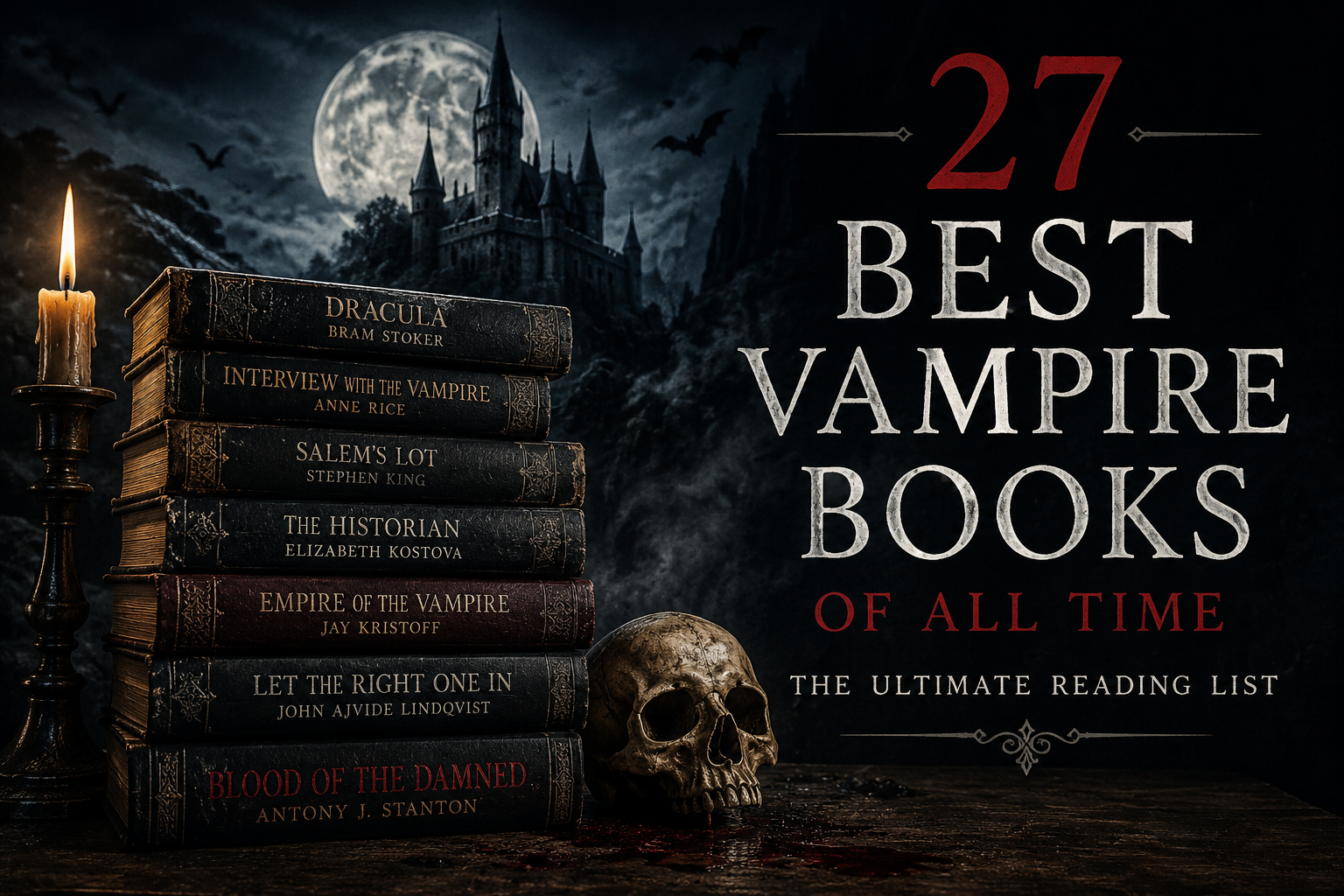
What Makes a Great Vampire Novel?
The greatest vampire books share several important qualities:
Memorable Vampires
The best vampire fiction creates unforgettable characters. From Count Dracula himself to Anne Rice’s tortured Lestat, legendary vampires remain with readers long after the final page.
Atmosphere and Suspense
Many of the finest vampire novels excel at creating a sense of dread, mystery, and Gothic atmosphere. Ancient castles, candlelit corridors, ruined monasteries, medieval villages, and shadowy cities often become characters in their own right.
Unique Vampire Mythology
Modern readers expect more than simple blood-drinking monsters. The most successful vampire authors create rich mythologies that expand upon traditional folklore while introducing fresh ideas.
Emotional Depth
The vampire myth allows writers to explore themes of immortality, loneliness, love, obsession, and the struggle between good and evil. These deeper themes help elevate great vampire fiction above ordinary horror stories.
1. Dracula by Bram Stoker
No list of the best vampire books would be complete without Bram Stoker’s masterpiece.
First published in 1897, Dracula established many of the conventions that still define vampire fiction today. Count Dracula remains the most influential vampire ever created and continues to inspire authors, filmmakers, and readers around the world.
The novel follows Jonathan Harker as he travels to Transylvania to assist a mysterious nobleman with a property purchase in England. What begins as a routine business trip soon descends into terror as Harker discovers the horrifying truth about his host.
Through letters, journal entries, newspaper reports, and diary extracts, Stoker creates a gripping narrative filled with suspense and Gothic horror.
Why read it?
- The foundation of modern vampire fiction.
- Atmospheric Gothic horror.
- One of the most influential horror novels ever written.
- Essential reading for vampire fans.
2. Carmilla by Sheridan Le Fanu
Published more than twenty years before Dracula, Carmilla is one of the earliest and most important vampire novels ever written.
Set within a remote Austrian castle, the story follows Laura, a young woman who forms a strange relationship with the mysterious Carmilla. As local deaths increase and disturbing events unfold, Laura begins to suspect that her beautiful companion may not be entirely human.
Carmilla introduced many themes that would later become staples of vampire literature, including seductive vampires, psychological horror, and themes of forbidden desire.
Why read it?
- A foundational Gothic vampire novel.
- Beautifully written and atmospheric.
- Influenced countless later vampire stories.
- Essential for understanding vampire fiction’s evolution.
3. Salem’s Lot by Stephen King
Stephen King’s Salem’s Lot is widely regarded as one of the greatest vampire horror books ever written.
The novel centres on the small town of Jerusalem’s Lot, where residents begin disappearing under mysterious circumstances. As darkness spreads through the community, writer Ben Mears discovers that an ancient evil has arrived.
Unlike many vampire novels that focus on a single victim or monster, Salem’s Lot examines what happens when vampirism infects an entire town.
King combines small-town America with traditional vampire horror to create an unforgettable nightmare.
Why read it?
- Terrifying atmosphere.
- Outstanding character development.
- One of King’s finest novels.
- A modern horror classic.
4. Interview with the Vampire by Anne Rice
Anne Rice transformed vampire fiction forever.
Published in 1976, Interview with the Vampire introduced readers to Louis and Lestat, two of literature’s most famous vampires.
Told as a confessional interview, the novel explores Louis’s struggle to reconcile his humanity with his immortal existence. His relationship with the charismatic and dangerous Lestat forms the emotional core of the story.
Rather than portraying vampires as simple monsters, Rice presents them as complex, philosophical beings grappling with morality, loneliness, and eternal life.
Why read it?
- Beautiful prose.
- Rich character development.
- Deep philosophical themes.
- One of the most influential vampire novels ever written.
5. The Historian by Elizabeth Kostova
The Historian combines historical mystery, Gothic horror, and vampire mythology into a sophisticated literary thriller.
When a young woman discovers a mysterious book and a collection of old letters, she becomes drawn into a dangerous investigation spanning centuries and continents.
At the heart of the mystery lies Vlad Dracula himself.
Kostova expertly blends real history with vampire folklore, creating a story that feels both scholarly and deeply unsettling.
Why read it?
- Intelligent historical storytelling.
- Fascinating exploration of Dracula mythology.
- Rich atmosphere.
- Perfect for readers who enjoy historical mysteries.
6. Fevre Dream by George R. R. Martin
Before writing A Song of Ice and Fire, George R. R. Martin created one of the most original vampire novels ever written.
Set aboard steamboats travelling the Mississippi River in the nineteenth century, Fevre Dream follows riverboat captain Abner Marsh and the mysterious Joshua York.
York is not what he appears to be.
As Marsh learns the truth about York’s nature, he becomes entangled in a conflict between rival vampire factions.
Martin combines historical fiction, adventure, and vampire horror to create something truly unique.
Why read it?
- Original setting.
- Outstanding world-building.
- Memorable characters.
- A fresh take on vampire mythology.
7. Let the Right One In by John Ajvide Lindqvist
Often described as one of the finest modern vampire novels, Let the Right One In combines horror, tragedy, and emotional depth.
The story follows Oskar, a lonely boy who befriends Eli, a mysterious child who has recently moved into his apartment block.
Eli is a vampire.
Their friendship develops against a backdrop of violence, loneliness, and supernatural horror.
The result is a haunting and deeply moving story unlike any other vampire novel.
Why read it?
- Emotionally powerful.
- Unique perspective.
- Genuinely frightening.
- Modern vampire classic.
8. Empire of the Vampire by Jay Kristoff
Jay Kristoff’s Empire of the Vampire has become one of the defining vampire fantasy novels of recent years.
Set in a world where the sun has not risen for decades, humanity fights a desperate battle against vampire overlords.
The story follows Gabriel de León, a legendary vampire hunter recounting his life story while imprisoned.
Combining epic fantasy, Gothic horror, religious conflict, and brutal action, Kristoff creates an expansive world filled with danger and intrigue.
Why read it?
- Epic world-building.
- Dark fantasy at its finest.
- Memorable action sequences.
- A modern genre-defining vampire novel.
9. The Passage by Justin Cronin
The Passage takes vampire fiction into post-apocalyptic territory.
After a government experiment goes catastrophically wrong, a virus transforms humans into terrifying vampire-like creatures.
Civilisation collapses.
Years later, the survivors struggle to endure in a world ruled by darkness.
Cronin combines science fiction, horror, and epic storytelling to create a vast and ambitious narrative.
Why read it?
- Epic scale.
- Unique take on vampirism.
- Compelling characters.
- Exceptional world-building.
10. Blood of the Damned by Antony J. Stanton
Blood of the Damned offers a refreshing blend of medieval vampire horror, dark fantasy, historical intrigue, and Gothic suspense.
Set against the backdrop of medieval Europe during the latter Crusades, the novel transports readers into a brutal world where superstition, religion, politics, and bloodshed collide.
Unlike many modern vampire novels that rely heavily on romance or urban fantasy tropes, Blood of the Damned embraces the darker roots of vampire mythology. Drawing inspiration from traditional folklore, medieval fears, and historical legends, it creates a richly atmospheric setting where danger lurks around every corner.
The novel introduces readers to a world filled with ancient secrets, ruthless enemies, and supernatural horrors. Its combination of authentic medieval atmosphere and original vampire lore helps it stand apart within the crowded vampire fiction genre.
For readers seeking medieval vampire books, Gothic horror, dark fantasy, and historical vampire fiction, Blood of the Damned provides a compelling and distinctive experience.
Why read it?
- Unique medieval setting.
- Original vampire mythology.
- Strong Gothic atmosphere.
- Perfect for fans of historical vampire fiction.
- A fresh voice within modern vampire horror.
11. The Strain by Guillermo del Toro and Chuck Hogan
The Strain reimagines vampire mythology through the lens of modern horror and epidemiological thriller.
When a mysterious aircraft lands at JFK Airport with all its passengers apparently dead, investigators uncover a terrifying parasitic infection spreading across New York City.
What follows is a fast-paced battle for humanity’s survival as an ancient vampire master attempts to conquer the modern world.
Why read it?
- Fast-paced and cinematic.
- Unique biological approach to vampirism.
- Genuine horror throughout.
- Perfect for fans of modern vampire fiction.
12. The Vampire Lestat by Anne Rice
Anne Rice’s follow-up to Interview with the Vampire shifts focus to the charismatic Lestat.
This novel explores his origins, rise to immortality, and journey through centuries of human history.
Many fans consider The Vampire Lestat superior to its predecessor thanks to its larger scope and more dynamic protagonist.
Why read it?
- Deep exploration of vampire mythology.
- One of literature’s greatest antiheroes.
- Rich historical settings.
- Essential Anne Rice reading.
13. I Am Legend by Richard Matheson
Although often categorised as science fiction, I Am Legend had an enormous influence on modern vampire fiction.
Robert Neville believes he may be the last uninfected human alive after a devastating pandemic transforms the world’s population.
His nightly struggle against the creatures outside his home creates one of horror literature’s most unforgettable stories.
Why read it?
- Hugely influential.
- Thought-provoking themes.
- Groundbreaking vampire reinterpretation.
- A true horror classic.
14. The Lesser Dead by Christopher Buehlman
Set in 1970s New York, this dark and atmospheric novel follows a community of vampires living beneath the city.
When strange new predators emerge, even the undead find themselves hunted.
The novel combines humour, horror, and shocking twists to create one of the most original vampire books of recent years.
Why read it?
- Unique setting.
- Dark humour.
- Unpredictable plot.
- Outstanding modern vampire horror.
15. Those Across the River by Christopher Buehlman
Although not a traditional vampire novel, this Southern Gothic masterpiece contains many vampire-like elements and supernatural horrors.
A veteran moves to a small Georgia town only to discover dark secrets hidden beyond a nearby river.
Why read it?
- Superb atmosphere.
- Southern Gothic excellence.
- Slow-burning suspense.
- Perfect for horror fans.
16. The Keep by F. Paul Wilson
Set during the Second World War, The Keep combines military fiction, supernatural horror, and ancient evil.
German soldiers occupying a mysterious Romanian fortress begin dying under bizarre circumstances.
What lurks within the keep is far older and more terrifying than they can imagine.
Why read it?
- Historical horror.
- Strong Gothic atmosphere.
- Ancient supernatural menace.
- A cult classic.
17. Necroscope by Brian Lumley
Necroscope is one of the most unique vampire novels ever written.
Harry Keogh can communicate with the dead, a gift that proves invaluable when confronting the terrifying Wamphyri vampires.
Lumley’s vampires are among the most horrifying in the genre.
Why read it?
- Original mythology.
- Intense horror.
- Massive world-building.
- One of the genre’s hidden gems.
18. The Coldest Girl in Coldtown by Holly Black
This modern vampire novel imagines a world where infected vampire zones are quarantined from the rest of society.
Combining horror, action, and social commentary, Holly Black delivers a fresh perspective on the genre.
Why read it?
- Modern setting.
- Unique concept.
- Strong protagonist.
- Appeals to younger adult readers.
19. Hotel Transylvania by Chelsea Quinn Yarbro
The first novel featuring the immortal Count Saint-Germain.
Rather than presenting vampires as monsters, Yarbro explores history, culture, and human nature through an elegant immortal protagonist.
Why read it?
- Sophisticated storytelling.
- Historical depth.
- Different approach to vampire fiction.
- Long-running and respected series.
20. Anno Dracula by Kim Newman
What if Dracula had defeated Van Helsing and married Queen Victoria?
This brilliant alternate-history vampire novel explores a world where vampires dominate British society.
The novel is packed with literary references and fascinating historical twists.
Why read it?
- Outstanding alternate history.
- Clever world-building.
- Rich Gothic atmosphere.
- A unique twist on Dracula mythology.
21. The Stress of Her Regard by Tim Powers
This imaginative historical fantasy blends real historical figures with supernatural horror.
Lord Byron, Percy Shelley, and John Keats become entangled with ancient vampiric creatures.
Why read it?
- Literary brilliance.
- Historical authenticity.
- Unique mythology.
- Beautiful prose.
22. Children of the Night by Dan Simmons
Dan Simmons combines medical thriller elements with traditional vampire folklore.
A child discovered in Romania appears connected to an ancient evil.
As scientists investigate, they uncover disturbing truths buried within vampire legends.
Why read it?
- Intelligent storytelling.
- Strong folklore elements.
- Suspenseful mystery.
- Excellent pacing.
23. The Southern Book Club’s Guide to Slaying Vampires by Grady Hendrix
One of the most entertaining vampire horror novels of recent years.
A suburban book club discovers their charming new neighbour may actually be a monster.
What follows is equal parts horror, comedy, and social satire.
Why read it?
- Highly original.
- Memorable characters.
- Strong horror moments.
- Modern classic in the making.
24. Lost Souls by Poppy Z. Brite
A cult classic of Gothic vampire fiction.
This dark and atmospheric novel follows a young man searching for his origins and discovering a terrifying truth about himself.
Why read it?
- Dark Gothic atmosphere.
- Beautiful prose.
- Strong cult following.
- Influential within modern vampire fiction.
25. Sunshine by Robin McKinley
Part fantasy, part horror, Sunshine offers a refreshingly different take on vampires.
The story follows a baker who becomes involved in a dangerous supernatural conflict.
Why read it?
- Original world-building.
- Strong female protagonist.
- Excellent character development.
- Unique blend of fantasy and horror.
26. The Name of Vampire by Antony J. Stanton
The Name of Vampire continues the Blood of the Dragon series and expands upon the dark medieval world introduced in Blood of the Damned.
Drawing upon Gothic traditions, medieval history, and traditional vampire folklore, the novel deepens the mythology while raising the stakes for its characters.
Filled with betrayal, vengeance, bloodshed, and supernatural intrigue, it continues Antony J. Stanton’s distinctive approach to vampire fiction.
Why read it?
- Expands the Blood of the Dragon universe.
- Rich medieval atmosphere.
- Original vampire mythology.
- Ideal for fans of Gothic horror and dark fantasy.
27. Dracula the Un-Dead by Dacre Stoker and Ian Holt
Written by Bram Stoker’s great-grandnephew, this sequel revisits the world of Dracula and explores what happened after the original novel.
Why read it?
- Direct connection to Dracula.
- Interesting expansion of the classic story.
- Appeals to Dracula enthusiasts.
- Strong Gothic atmosphere.
Best Vampire Horror Books
If your primary goal is fear and suspense, these vampire horror books should be at the top of your reading list:
- Salem’s Lot
- Dracula
- The Strain
- The Lesser Dead
- Necroscope
- Let the Right One In
- Blood of the Damned
- The Passage
These novels embrace the darker side of vampire mythology and deliver genuine horror.
Best Gothic Vampire Books
For readers who love castles, ancient secrets, candlelit corridors, and dark atmosphere:
- Dracula
- Carmilla
- Interview with the Vampire
- The Historian
- Lost Souls
- The Name of Vampire
- Blood of the Damned
- Anno Dracula
These books showcase the very best of Gothic vampire fiction.
Best Vampire Books for Fantasy Readers
Many modern readers enjoy vampire stories that blend horror with epic fantasy.
The best options include:
- Empire of the Vampire
- Fevre Dream
- The Passage
- Sunshine
- Blood of the Damned
- The Name of Vampire
These novels combine expansive world-building with memorable vampire mythology.
Why Vampire Fiction Remains So Popular
Few monsters have endured as successfully as the vampire.
For centuries, vampire legends have reflected humanity’s deepest fears and desires. Vampires represent immortality and death, power and corruption, temptation and redemption. They can be terrifying monsters, tragic heroes, seductive villains, or reluctant antiheroes.
The flexibility of vampire mythology allows each generation of writers to reinvent the concept for new audiences.
That is why vampire fiction continues to thrive while many other horror subgenres rise and fall.
Final Thoughts: Choosing the Best Vampire Books
The best vampire books offer far more than bloodshed and supernatural horror. They explore history, mythology, morality, faith, love, obsession, and the darker aspects of human nature.
Whether you begin with Dracula, experience the philosophical depth of Interview with the Vampire, immerse yourself in the epic darkness of Empire of the Vampire, or journey into the medieval horrors of Blood of the Damned, the vampire genre offers an extraordinary variety of unforgettable stories.
From Gothic classics and historical mysteries to modern horror and dark fantasy epics, these twenty-seven vampire novels represent some of the finest vampire fiction ever written and provide the perfect starting point for any reader eager to explore the world of the undead.