Vlad Dracula vs Dracula Myth
The Real History Behind the World’s Most Famous Vampire
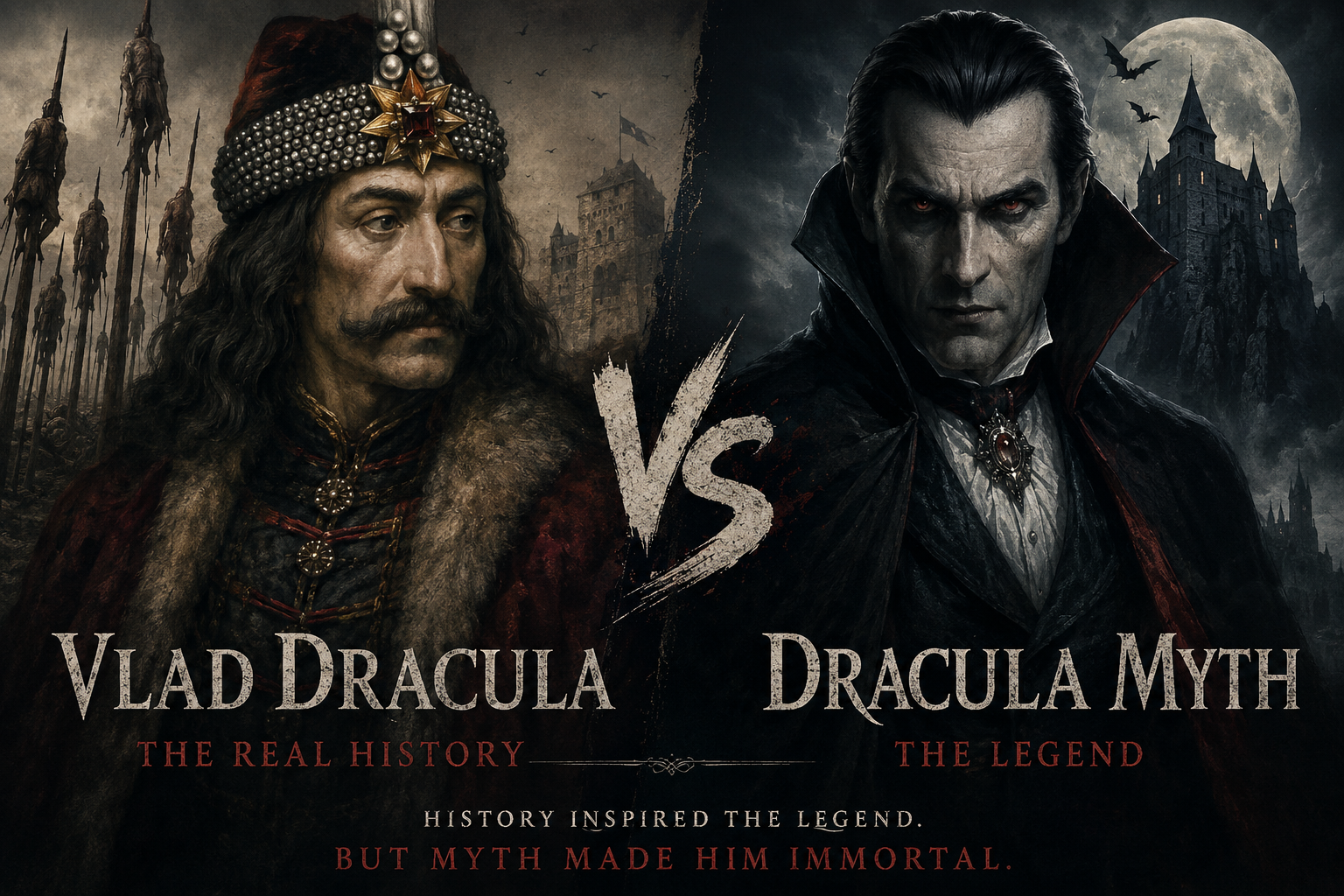
When people hear the name “Dracula,” they usually picture a pale vampire cloaked in black, lurking in a Gothic castle beneath a blood-red moon. Yet behind the legend stands a real historical figure: Vlad III of Wallachia, better known as Vlad the Impaler or Vlad Dracula.
But how much of Bram Stoker’s legendary vampire Count Dracula was actually inspired by the real Vlad Dracula? Was Vlad truly a blood-drinking monster, or has centuries of myth transformed a brutal medieval ruler into something supernatural?
For fans of Gothic horror, vampire fiction, and dark historical fantasy, the truth behind the Dracula myth is every bit as fascinating as the fiction itself.
If you enjoy dark medieval vampire worlds, historical horror, and sinister legends, explore our full pillar guide here:
Ultimate Guide to Vampire Fiction
Who Was Vlad Dracula?


The historical Vlad Dracula was born in 1431 in what is now modern-day Romania. He ruled the principality of Wallachia during one of the bloodiest and most unstable periods in Eastern European history.
His father, Vlad II Dracul, belonged to the Order of the Dragon — a Christian military order created to defend Europe against Ottoman expansion. The name “Dracul” meant “dragon,” though later interpretations associated it with “devil.” Vlad became known as “Dracula,” meaning “son of Dracul” or “son of the dragon.”
Unlike the immortal vampire of fiction, the real Vlad was a warrior prince, military ruler, and political survivor caught between the Ottoman Empire and Christian Europe.
Yet history remembers him for one thing above all else:
Impalement.
Why Was Vlad Called “The Impaler”?
Vlad III earned his infamous nickname because he executed enemies by impaling them on wooden stakes.
The method was deliberately horrific. Victims could take hours or even days to die. Contemporary accounts claimed forests of impaled bodies lined roads and battlefields during Vlad’s reign.
Some historians believe the numbers were exaggerated by political enemies and propaganda pamphlets spread throughout Europe. Still, even allowing for exaggeration, Vlad’s reputation for brutality was very real.
To modern audiences, these stories feel almost supernatural — the perfect foundation for later vampire mythology.
But Vlad Dracula was not a vampire.
He never drank blood.
He never rose from the dead.
He never slept in a coffin.
Those elements came later.
Did Bram Stoker Base Dracula on Vlad the Impaler?


This is where history and myth begin to blur.
Irish author Bram Stoker published Dracula in 1897, creating the most famous vampire novel ever written.
Many readers assume Stoker directly based Count Dracula on Vlad the Impaler. The reality is more complicated.
Research suggests Stoker discovered the name “Dracula” while studying Eastern European history and folklore. He learned that the name had associations with cruelty and possibly “devil.”
However, literary scholars argue Stoker knew surprisingly little about the real Vlad Dracula. His working notes contain minimal references to Vlad III, and most evidence suggests Stoker borrowed the name and fragments of Romanian history rather than building the character directly from the real ruler.
Instead, Count Dracula became a blend of influences:
- Eastern European vampire folklore
- Gothic fiction traditions
- Victorian fears about death and disease
- Aristocratic decadence
- Ancient superstition
- And the sinister historical name “Dracula”
The fictional vampire evolved into something far larger than the real prince who inspired him.
The Biggest Differences Between Vlad Dracula and Count Dracula
| Vlad Dracula | Count Dracula |
|---|---|
| Real 15th-century ruler | Fictional vampire |
| Human warlord | Undead immortal |
| Political and military leader | Supernatural predator |
| Famous for impalement | Famous for drinking blood |
| Ruled Wallachia | Lives in Transylvania |
| Died in battle | Cannot truly die naturally |
| Historical figure | Gothic horror icon |
This separation between history and fiction is important because popular culture often merges the two together.
Modern films, television shows, and novels frequently portray Vlad Dracula as literally becoming a vampire — even though Bram Stoker’s original novel never clearly states that Count Dracula is Vlad the Impaler.
Why Transylvania Became Linked to Dracula


One of the strangest twists in the Dracula legend is that the historical Vlad Dracula had limited connections to Transylvania itself.
Yet today, Transylvania is inseparable from vampire mythology.
This largely happened because Bram Stoker chose Transylvania as the setting for his fictional vampire’s castle. The remote mountains, medieval ruins, wolves, forests, and isolated villages perfectly suited Gothic horror.
Modern tourism later amplified the myth, especially around Bran Castle — often marketed as “Dracula’s Castle” despite little historical connection to Vlad the Impaler.
The fictional landscape became more famous than the historical truth.
Why the Dracula Myth Endures
Dracula survives because the character taps into universal fears and desires:
- Fear of death
- Fear of disease
- Fear of corruption
- Desire for immortality
- Seduction and temptation
- Darkness hidden beneath civilisation
The real Vlad Dracula represented human cruelty.
The fictional Dracula represents eternal evil.
That combination created one of the most powerful horror myths in literary history.
More than a century after Bram Stoker published Dracula, the vampire still dominates horror fiction, dark fantasy, film, television, and gaming culture.
Dracula’s Influence on Modern Vampire Fiction
Modern vampire fiction owes an enormous debt to both Vlad Dracula and Bram Stoker’s Count Dracula.
Without the terrifying historical reputation of Vlad the Impaler, Stoker may never have found the perfect name for his immortal monster.
Without Stoker’s Gothic imagination, Vlad III might have remained a relatively obscure medieval ruler known mainly by historians.
Together, history and fiction fused into something unforgettable.
That legacy can still be seen in:
- Gothic vampire horror novels
- Dark fantasy vampire sagas
- Medieval vampire epics
- Supernatural horror fiction
- Vampire television and film adaptations
- Modern dark fantasy literature
For readers who love brutal medieval settings, ancient vampire myths, and dark Gothic worlds, the Dracula legend continues to inspire some of the best vampire books ever written.
Discover More Vampire Legends and Gothic Horror
If you enjoy exploring vampire mythology, dark fantasy horror, and the origins of Gothic vampire fiction, visit our complete guide here:
Ultimate Guide to Vampire Fiction
You may also enjoy:
- Origins of Vampire Legends
- History of Vampires in Literature
- Best Gothic Horror Novels
- Best Medieval Vampire Books
- Why Vampire Fiction Never Dies
- Best Vampire Books Like Dracula
And for readers seeking a brutal medieval vampire saga filled with ancient darkness, bloodshed, and Gothic horror, explore the award-winning world of Blood of the Damned by Antony J Stanton.
Written by : AJS

Subscribe To My Newsletter
For book news, sneak-peaks, give-aways, fascinating stories of vampires, dark fantasy and horror from around the world, as well as the FREE novella, "Speak of the Devil," sign up for all this and more.
Link up with other link-minded fans of the dark and macabre.
Come. Join us.