Back in the good old days of yore, people believed in demons, and they thought that knowing a demon’s name helped gain some element of power over it. This is one of the central ideas of “The Name of Vampire”: an age-old belief in the vital, arcane knowledge needed for survival.
Many cultures across the world had a similar belief. Some gave children secret names known only to close family members. The fear was simple: if a sorcerer or witch learned that name, they could gain power over the individual. Ancient Egyptians believed a person’s name formed part of their eternal soul. Hence, Egyptian rulers sometimes had the names of enemies removed from their monuments or tombs, thus harming them in the afterlife.
There’s a tale of how the ancient Egyptian goddess Isis (if you’ve read Blood of the Damned, you’ll already be familiar with that cunning vixen) tricked the sun god Ra into revealing his secret name. Ra was old, and drooled on the ground. Isis gathered his saliva, mixed it with dirt, and formed a poisonous snake that bit Ra. To be cured of the venom, he had to reveal his secret name to her, and in so doing, Isis gained some of his power.
In Judaism, it was long believed that the four-letter name of God was too sacred to be spoken aloud. Even Harry Potter and the residents of Hogwarts were bound by the same logic when it came to speaking of He-Who-Must-Not-Be-Named, and this was the central concept of my novella, “Speak of the Devil.”
Those of you who’ve read the novella already, well, you can see how that turned out for them!
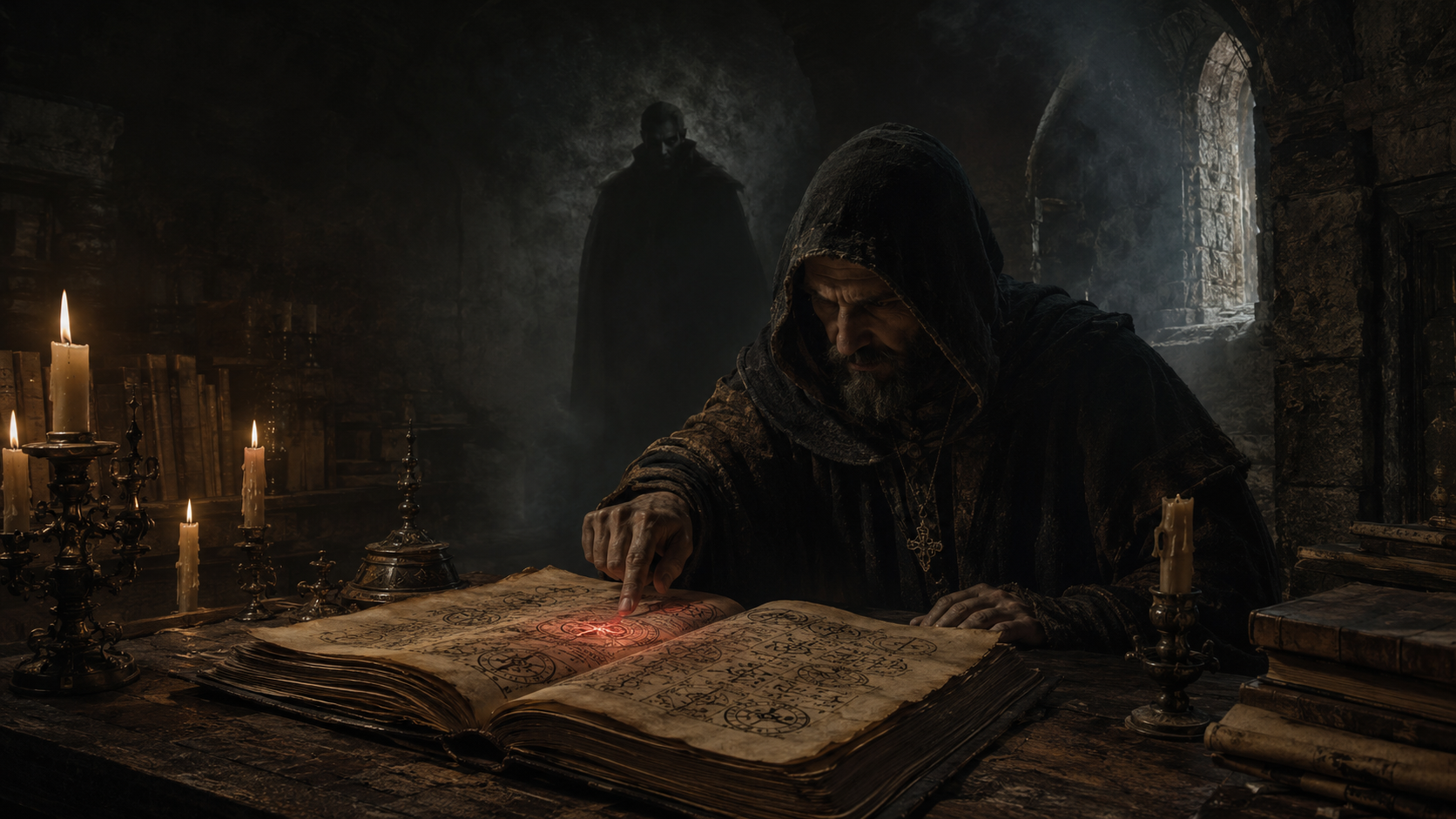
This idea is even more interesting when one considers demonology. Medieval grimoires claimed demons could be summoned and controlled if one knew their true names. One of the most famous examples is the Lesser Key of Solomon, a seventeenth-century compilation of European occult texts that catalogues dozens of demons. It says that each one has a specific name, title, rank, and area of influence. And by knowing their names, they can be commanded.
This was a theme that even appeared in the Bible. Mark 5:1–20 details one of Jesus’s most dramatic exorcisms. He confronted a man possessed by a demon. The demon replied, “My name is Legion, for we are many.” The revelation of the name exposed the nature and extent of the demonic opposition.
Accounts from medieval Europe describe exorcists spending considerable time and energy demanding of possessing demons, “Who are you? By what authority are you here?” The symbolism is fascinating: Ignorance empowers darkness. Knowledge defeats fear, and could be the difference between life and death.
This theme reappears throughout folklore, and can be seen in the fairy tale of Rumplestiltskin, made into a major film last year. The creature is all-powerful right up until its name is learned and its power dissolves.
Similarly, in the classic 1973 film, “The Exorcist,” the priest is not merely seeking information when he demands to know the spirit’s name. He is seeking leverage and control in a bitter life-or-death struggle.
Across medieval Europe, there were many monsters of myth, some of whom feature in my books: Baphomet, moroi, the kikimora, vrykolakas, and, of course, the dreaded vampire. Each had different characteristics and weaknesses. If a creature was thought to be killing people, one needed to know exactly what it was that you were dealing with in order to triumph and prevail.
This is such an important point, I’m going to state it again: Knowing a creature’s name might be the difference between life and death. However, knowing the name is only the first battle in the war. The struggle still requires courage, determination, and faith. And often, personal sacrifice.
All of this leads me back to my latest novel, “The Name of Vampire.” Darius believes something is stalking him and his sister. In order to save her, in order to prevail, he must learn its name and its true nature. But that’s not always easy when people are too terrified to speak of it. And rightly so.
So just remember, in life today just as in ancient mythology, darkness thrives when it remains unnamed, when people don’t acknowledge or recognise it. But make no mistake, knowing the name of the vampire is only the start for poor Darius. He then must learn how to succeed – or die.
Written by : AJS

Subscribe To My Newsletter
For book news, sneak-peaks, give-aways, fascinating stories of vampires, dark fantasy and horror from around the world, as well as the FREE novella, "Speak of the Devil," sign up for all this and more.
Link up with other link-minded fans of the dark and macabre.
Come. Join us.